


























Commercial insurance, explained

Business coverage, explained in plain language.

Looking for answers about car, home, life or travel insurance? Visit the separate Insurance Knowledge Base. This directory focuses on commercial coverages and contract questions.

Most of what is online about business insurance is American, and the differences are not cosmetic. Canada has its own standard forms, its own endorsement families, its own workers’ compensation structure and its own construction documents. This is the reference written for that.

20%
What could a lower premium mean for you?Illustrative example: $2,400 → $1,920 per year is $480 less. Not an available offer. Try your own numbers →
Your next step starts hereNo obligation to buy

Choose your insurance type and continue to the contact options. This step does not submit an application.

Insurance Genie wearing a tailored business vest
Coverage, explained clearly.Explore common commercial policies
Better questions. Clearer choices.Learn the terms before your review
Live examples
CRM examples will appear here once the feed is connected.

From Insurance Genie

Recent business insurance purchases

Explore recent policy purchases shared through our participating insurance professionals.

Recent policies will appear here when the Insurance Genie CRM feed is connected.

Three ways in

People arrive here three different ways.

They know the coverage they want to understand, they know their trade, or — most often, and most urgently — they have a document in front of them demanding something they do not recognise. Each of those is a different page.

Illustration of commercial buildings beside a blue protection shield

By coverage

What it is, who needs it, what it specifically does not cover, and where the Canadian form differs from the American one people find first.

34 coverages

By industry

What a business in your class actually gets asked for, what the common claim is, and the coverages that are routinely missed in that trade.

60+ classes across seven sectors

By situation

A contract, a lease, a permit or a general contractor is demanding something. This is the axis nobody in Canada has built, and it is the one where the reader needs an answer today.

10 situations

By situation

Something is being demanded of you.

These are the pages someone reads at nine at night with a subcontract open on the other screen. They are written second person, they answer the question in the first sentence, and they say what to do next.

Your client wants to be added to your policyWhat an additional insured actually is, what it costs, what happens if you sign the contract without it, and why a certificate of insurance is not the same thing.
Openwhat does additional insured mean
Your contract says “primary and non-contributory”What the clause obliges your insurer to do, whether a Canadian CGL provides it automatically, and what to ask for if it does not.
Openprimary and non-contributory meaning canada
Your contract asks for a waiver of subrogationWhat you are giving up, why insurers care, and what happens to your coverage if you sign one without telling them.
Openwaiver of subrogation meaning
Your client requires $5 million and you carry $2 millionHow the jump is actually made, roughly what the additional limit costs relative to the first $2 million, and how fast it can be issued.
Openclient requires $5 million liability insurance
The general contractor wants a WSIB clearance and a certificateWhy these are two different documents from two different places, which one proves what, and what an independent operator has to do.
Openwsib clearance vs certificate of insurance
Your commercial lease has an insurance scheduleClause by clause: the limit, tenants’ legal liability, the landlord as additional insured, and the ones you should push back on.
Opencommercial lease insurance requirements ontario
You are hiring your first employeeWhat changes the day someone starts: board registration, employers’ liability, employment practices exposure, and what your CGL does and does not now do.
Openinsurance when hiring first employee ontario
A municipal permit or licence needs proof of insuranceWhat the municipal certificate form is asking for in plain terms, who has to be named, and how long it takes.
Opencity of toronto certificate of insurance requirements
You are starting as a subcontractorThe document stack a general contractor will ask for before you can start, and the order to get it in.
Contesteddo i need insurance to work as a subcontractor
Your renewal came back higherWhat actually moves a commercial premium, what is market and what is you, and whether remarketing is worth it in the current cycle.
Contestedwhy did my business insurance go up
Liability

What you owe someone else.

Commercial General Liability (CGL)Covers what you become legally liable to pay when your operations injure someone or damage property that is not yours.
Saturated
Products & Completed Operations (Products-CO)Covers injury or damage caused by a product after it leaves your hands, or by work after you have finished it.
Contested
Tenants’ Legal Liability (TLL)Covers your liability for damaging premises you rent, when your landlord’s insurer comes after you for it.
Contested
Professional Liability (E&O)Covers economic loss a client suffers because your advice, design or professional service was wrong or late.
Saturated
Directors’ & Officers’ Liability (D&O)Covers the personal liability of directors and officers for decisions made running the organization.
Open
Employment Practices Liability (EPL)Covers claims by employees and candidates — wrongful dismissal, harassment, discrimination, human rights complaints.
Contested
Cyber Liability (Cyber)Covers breach response, third-party liability, ransomware, business interruption from a cyber event, and privacy regulatory exposure.
Saturated
Umbrella / Excess Liability (Umbrella)Adds limit above your CGL, auto and employers’ liability once the underlying limit is exhausted.
Contested
Pollution / Environmental Liability (CPL)Covers cleanup and third-party claims from pollution conditions the CGL excludes.
Contested
Liquor LiabilityCovers liability arising from serving alcohol, including harm caused by a patron after leaving.
Contested
Abuse LiabilityCovers allegations of abuse, and the vicarious liability of the organization for it.
Contested
Why this exists

American answers to Canadian questions.

Search almost any commercial insurance clause from Canada and the first page of results is American. That is not merely unhelpful; on several of these topics it is wrong. There is no ISO equivalent to Tenants’ Legal Liability under the IBC form. There is no US analogue to a WSIB clearance certificate, or to the SPF 6 endorsement family, or to the Statutory Conditions printed in every Canadian property policy outside Quebec. Canadian construction runs on CCDC documents, not AIA.

A business owner who reads an American page about additional insureds and then signs a Canadian subcontract has been actively misled. That is the gap this reference exists to close.

How we handle numbers here

Canada publishes no commercial insurance tariff. Any page quoting a firm premium for a class of business is quoting one broker’s book, not a market.

So cost figures on these pages are ranges, they carry the basis they were drawn from, and they say how many quotes stand behind them. Where we have no defensible figure, the page says so rather than borrowing one.

Reading is the easy part.

Once you know what the contract is asking for, one request gets it priced by someone licensed to place it.

Be prepared

Claims scenarios: what happens next?

Hypothetical situations to help you prepare questions—not actual client claims or promises of coverage.

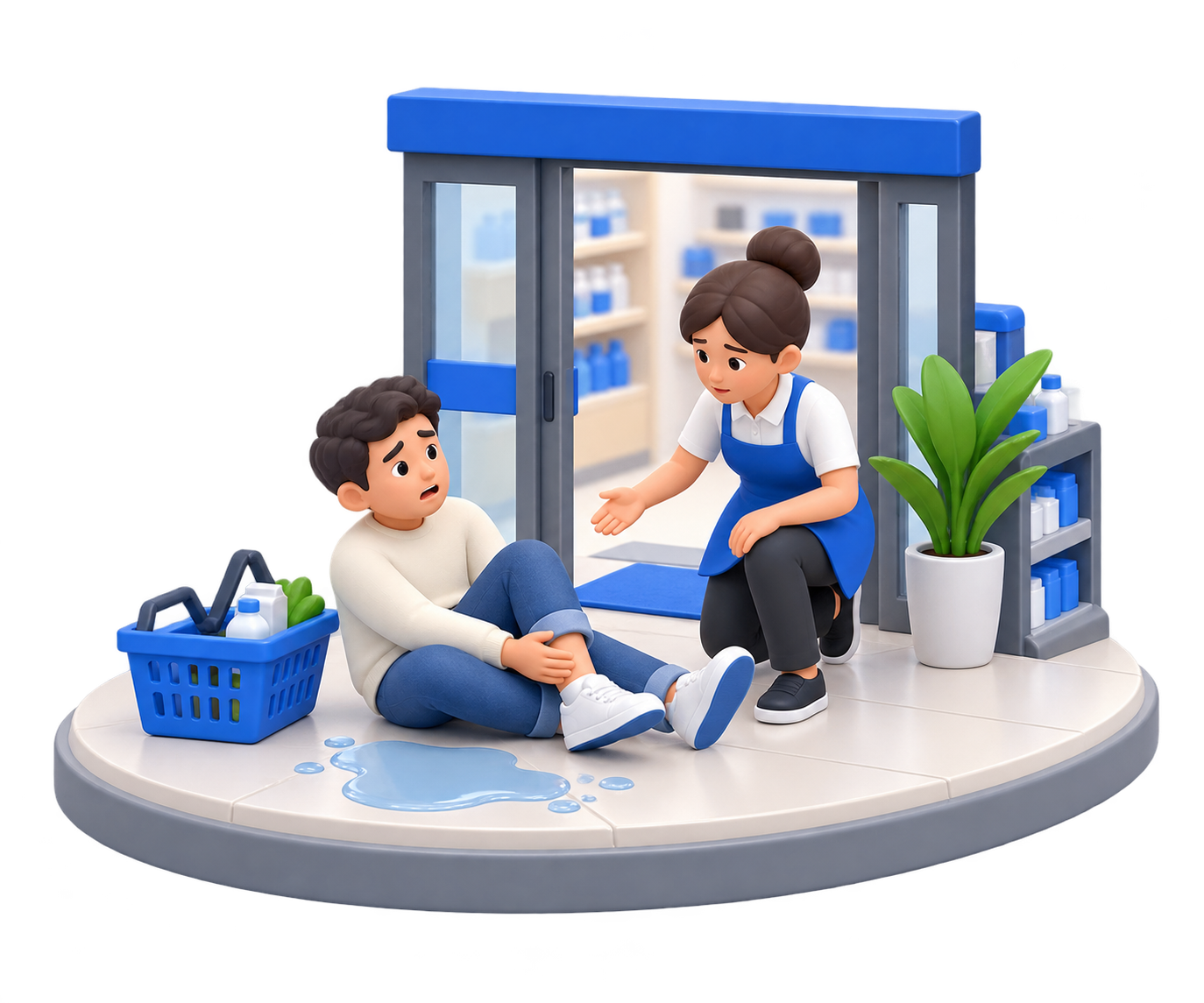
A shop employee assisting a customer after a slip

A customer alleges an injury

Scenario: Someone alleges an injury arose from the business operations.

What happens next: Preserve incident records and notify the insurer. Declared activities, liability wording and the facts determine whether a policy responds.

Illustration: equipment is damaged

Equipment is damaged

Scenario: Equipment used by the business is damaged or stolen.

What happens next: Document ownership, location and cause. Ask the insurer to review the insured property, exclusions, valuation and deductible.

Illustration: operations are interrupted

Operations are interrupted

Scenario: Damage prevents the business from operating normally.

What happens next: Keep revenue and expense records. Business interruption depends on the insured trigger, selected coverage and applicable terms.

Actual outcomes depend on the facts and applicable wording. Read claims guidance · Ask about the next step